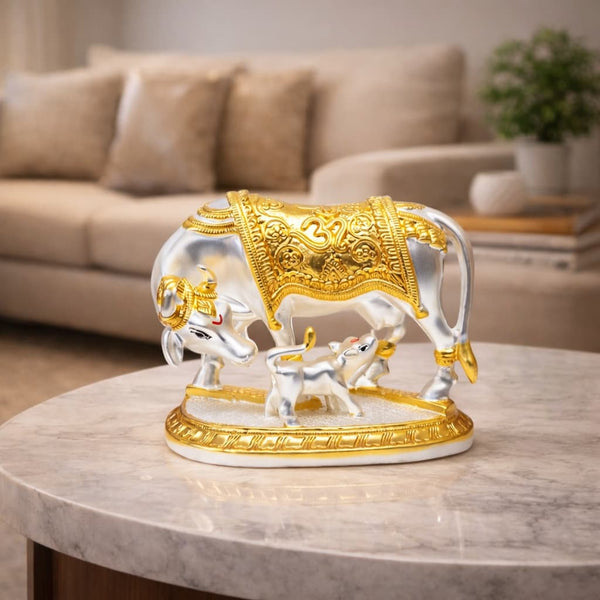

One of the most common questions we get at Gold Art India is whether to choose gold plated or silver plated for a deity idol. The honest answer depends on three things: the deity being worshipped, the aesthetic of your home, and how you intend to care for the idol. Here is a straightforward comparison.
What Electroplating Actually Is
Electroplating is a process where metal ions are deposited onto a surface through an electrical current. The idol — made from high-quality polyresin — is submerged in a bath of dissolved metal with current running through it. The metal bonds to the polyresin surface at a molecular level. This is fundamentally different from spray painting or a metal wash, which simply coats the surface without bonding.
At Gold Art India, gold plating uses approximately 22 karats of gold. Silver plating uses 999 grade silver — the same purity used in fine silver jewellery. The thickness and quality of the plating determines how long the finish holds up. Spray-painted or lacquer-coated idols, common in the cheaper market, fade, chip, and peel within months — electroplated idols do not.
Which Lasts Longer
Properly done, both finishes last equally long with the same care. The biggest risk to any electroplated idol is moisture. Water, oil, milk or any liquid applied directly on the surface will break down the lacquer topcoat that protects the plating, causing the metal to dull and potentially tarnish over time. Neither gold nor silver is immune to this — the lacquer protection matters more than which metal is used.
With basic care — soft dry cloth cleaning, no liquid contact, keeping away from direct sustained sunlight — both finishes hold up for years. The antique matte topcoat on some idols develops a natural patina over time which many devotees find adds character rather than detracting from the piece.
Which Looks Better
This is entirely personal and contextual. Gold has a warm tone — it catches warm light and reads as traditional, auspicious and festive. Silver has a cool tone — it reads as restrained, pure and meditative. The dual tone gold and silver finish combines both, giving the richness of two metals without committing fully to either.
For home interiors with warm wood tones, terracotta walls or traditional decor — gold plated tends to look more at home. For contemporary homes with white walls, marble or grey tones — silver plated often sits better. The dual tone gold silver works in almost any setting.
Which Metal for Which Deity
Hindu tradition has associations between metals and deities that are worth knowing:
Gold is associated with Lord Ganesha (prosperity and auspiciousness), Goddess Lakshmi (abundance), Lord Vishnu and Tirupati Balaji (divine grace), and Lord Ram (solar energy and royalty). Gold is the metal of the Sun in Jyotish astrology.
Silver is associated with Lord Shiva (the moon and cooling energy), Lord Krishna (Mercury and intellect), Goddess Kamdhenu and Kamdhenu vastu pieces (purity and the moon's abundance), and Lord Hanuman specifically for Shani puja (Saturn is pacified by silver). Silver is the metal of the Moon in Jyotish.
Copper is specifically associated with Lord Surya (the Sun deity) and is traditional for Tirupati Balaji in some South Indian traditions.
Which Region and Occasion Favours Which Metal
Beyond deity associations, regional and occasion-based preferences matter too:
- North Indian households: gold is generally the dominant sacred metal for home mandirs.
- South Indian households: silver is the traditional puja metal far more often, including for Lakshmi puja in many regional traditions.
- Gujarati and Marathi households: both metals are common, with silver often preferred for daily puja items specifically.
- Diwali gifting: gold is the colour most associated with the festival itself.
- Office desks and car dashboards: silver tends to read as more contemporary and professional; gold reads as warmer and more festive. Silver suits lighter interiors, gold suits darker ones.
What About Antique Matte Finishes
Antique matte is an additional treatment applied over either gold or silver plating. It intentionally dulls the shine to create depth and a heritage quality. An antique gold idol looks like an old temple piece — warm but not reflective. An antique silver idol looks like aged sacred silverware. Many devotees specifically prefer antique finishes for home worship because the lack of shine feels more reverential than a mirror-bright surface. Gold Art India also offers dual-tone idols combining both metals on the same piece, which suits devotees who appreciate both and want a piece that works in any interior.
The Practical Recommendation
If you are unsure, choose the dual tone gold and silver finish — it is the most versatile, the most popular, and looks appropriate in any setting. If you know which deity you are buying for, use the deity guide above. If your household has a regional tradition, lean into it — South Indian households are rarely wrong choosing silver, North Indian households rarely wrong choosing gold. If you prefer a specific aesthetic for your home, trust your instinct — both finishes are equally high quality.
Want to know how to look after the finish once you've chosen? See our complete care guide for gold and silver plated idols.
Browse all 22kt gold plated idols or all 999 silver plated idols from Gold Art India. Use the Gift Finder if you need help choosing for a specific occasion or recipient.