
It's one of the most common questions devotees ask before setting up a home mandir: can I actually keep a Shivling at home? The short answer is yes — Hindu tradition and Vastu Shastra both support it, but only when a few simple rules are followed. Get these right and a Shivling becomes a source of daily peace and devotion. Get them wrong (wrong size, wrong direction, wrong care) and it becomes a source of worry instead.
Here's everything you need to know — size, direction, daily care, and what NOT to do — in one place.
1. Yes, You Can Keep a Shivling at Home
The Shivling represents the infinite, formless nature of Lord Shiva. Traditionally worshipped in temples, it is equally welcomed into home mandirs across India — as long as it receives regular, respectful care. If you cannot commit to at least a simple daily acknowledgment (a diya, a few words of prayer), it's better to wait until you can.
2. Size Matters More Than People Think
This is the rule most first-time buyers get wrong. Vastu and Shaiva tradition are consistent on this: smaller Shivlings, under 6 inches, are recommended for home worship. Larger Shivlings are meant for temples, where dedicated priests can perform the elaborate daily abhishekam and rituals a bigger Shivling demands.
A compact 2–3 inch Shivling is considered the sweet spot for most Indian households — it asks for a simple daily diya and a few drops of water, with no formal abhishekam required on weekdays. This is manageable for almost any family's routine, which is exactly why it's the traditional recommendation.
3. Direction: North or Northeast
Place your Shivling in the north or northeast corner of your pooja room — this is considered the most sacred direction in Vastu, associated with Mount Kailash, Lord Shiva's abode. The Shivling itself should face north. Avoid placing it facing south or west.
🥔 Placement Tip: Never place the Shivling directly on the floor, a shelf, or bare fabric. Use a small raised platform, chowki, or clean stone/brass base underneath it.
4. Nandi Should Always Face the Shivling
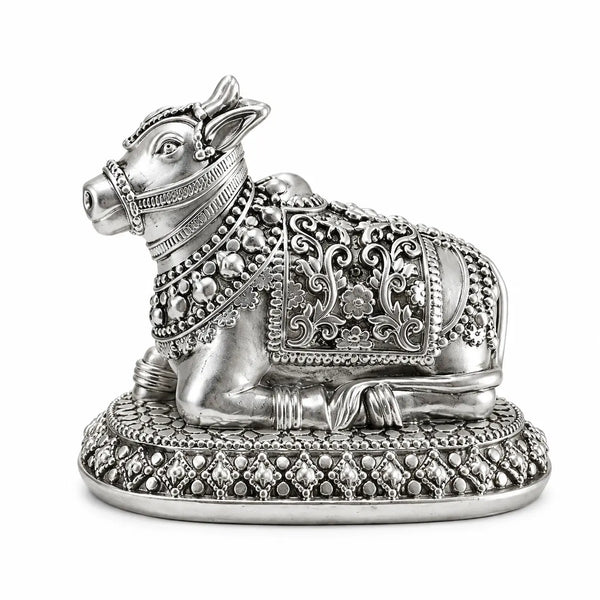
This is a rule most people don't know until they've already bought their Shivling: a Shivling is traditionally never kept alone. Nandi, Shiva's eternal devotee, should be placed directly in front of the Shivling, facing it — exactly as seen in every Shiva temple sanctum. This isn't optional decoration; it completes the devotional setup and is considered important for the Shivling's placement to be complete.

5. Daily Care: What to Do and What to Avoid
A Shivling asks for consistency, not complexity. Here's the simple version:
✅ Wash your hands before touching it • ✅ Offer a diya and a few drops of water daily • ✅ Keep it on a clean, raised base
❌ Never place it directly on the floor • ❌ Never touch it during personal impurity (illness, after non-vegetarian food, etc.) • ❌ A cracked or damaged Shivling should not be kept — it should be respectfully immersed in a river or water body
For a silver-plated Shivling specifically, skip milk or liquid abhishekam altogether — stick to dry devotional care with a soft cloth to preserve the finish.
6. Choosing the Right Shivling for Your Home
Based on everything above — small size, north-facing placement, low daily maintenance — a compact 3-inch silver plated Shivling is exactly the traditional "sweet spot" size recommended for home worship. Ours also comes with an intricately detailed Naag, Om symbol and Tripundra, packaged in a ready-to-place velvet gift box.

A Complete Devotional Setup
A Shivling and Nandi together — correctly sized, correctly placed, correctly cared for — form one of the most meaningful and traditionally accurate home mandir setups you can build. Read our companion guide on Nandi placement and significance to complete the pair.