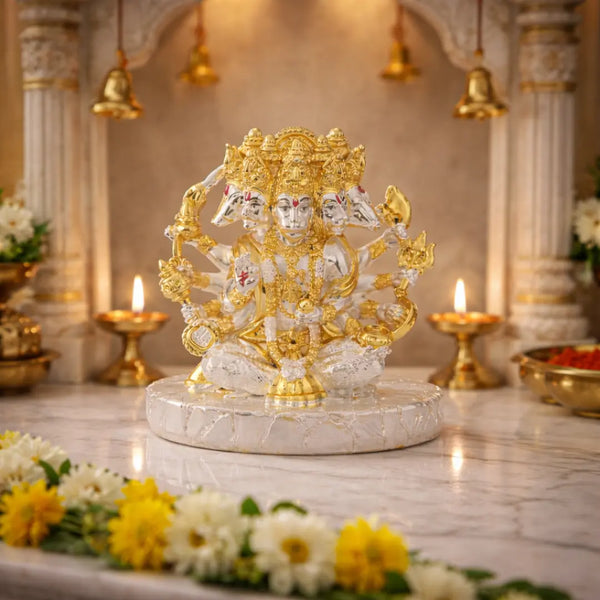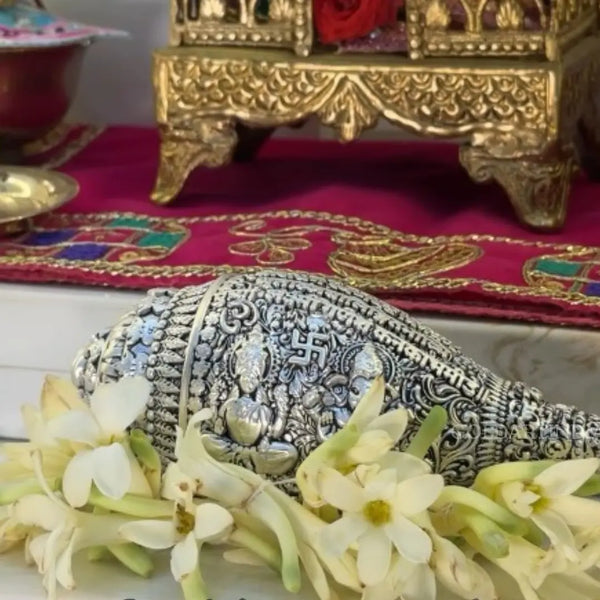

Of all the weapons carried by Hindu deities, Lord Hanuman’s Gada — the divine mace — is one of the most symbolically rich. It is not merely a weapon. It is a statement of divine authority, an embodiment of righteous strength, and a symbol of the complete destruction of ego and evil. Understanding what the Gada represents helps explain why a Hanuman Gada idol in the home is considered one of the most powerful protective objects in Hindu tradition.
What Is the Gada?
The Gada is a heavy, club-like mace — one of the oldest weapons in Indian warfare and mythology. In the divine context, it is one of the four attributes of Lord Vishnu alongside the Shankh, Sudarshana Chakra and Padma. Lord Hanuman, as a devoted servant and avatar of Shiva, carries the Gada as his primary weapon — representing his role as a warrior of dharma.
What the Hanuman Gada Symbolises
| Symbol | Meaning |
|---|---|
| Physical strength | Hanuman is the embodiment of physical and spiritual strength — the Gada is the outward expression of that power |
| Destruction of ego | The Gada destroys ahamkara — the ego — which is considered the root of all suffering in Vedantic philosophy |
| Protection | A Gada-bearing Hanuman is a guardian — the weapon signals to negative forces that the home is protected |
| Victory over obstacles | The Gada crushes obstacles — making it particularly powerful for people facing challenges in career, health or relationships |
| Divine authority | The Gada as a Vishnu attribute signifies that Hanuman acts with divine sanction — his protection is backed by the highest authority |
Why Hanuman Carries the Gada
In the Ramayana, Hanuman’s role is not that of a peaceful devotee — it is that of a warrior-devotee. He crossed the ocean alone, infiltrated Lanka, fought Ravana’s forces, burned the city, and carried the Sanjeevani mountain to save Lakshmana. Every one of these acts required not just devotion but extraordinary strength and fearlessness. The Gada is the weapon that enabled these acts of protection.
Hanuman’s combination of complete devotion (bhakti) and fearless strength (shakti) is unique in the Hindu pantheon. The Gada represents the shakti dimension — the raw, divine power that backs up the bhakti.
The Hanuman Gada Idol at Home
A Hanuman Gada idol in the home or office is a constant reminder of these qualities — strength, courage, protection, and the destruction of obstacles. It is particularly suited for:
- People going through challenging phases in life — career difficulties, health issues, legal matters
- New homes where protection from negative energy is a priority
- Offices and work spaces where strength and victory in competition are needed
- Hanuman devotees who recite the Hanuman Chalisa daily
The idol is available in three finishes — gold and silver dual tone, silver, and silver antique matte — each equally powerful, each suited to a different aesthetic.
Where to Place the Hanuman Gada Idol
| Location | Guidance |
|---|---|
| Main entrance | South-facing wall, idol facing South — the most protective placement |
| Puja room | Elevated on altar, alongside Ram and Sita |
| Office desk | South or South-East corner, facing the door |
| Avoid | Bedroom, bathroom, kitchen, floor level |
Is a Hanuman Gada idol different from a regular Hanuman idol?
Yes. A regular Hanuman idol shows Hanuman in his devotional posture — hands folded or chest open. The Gada idol specifically depicts Hanuman holding his divine mace, emphasising his warrior and protective aspect. Both are appropriate for worship; the Gada form is particularly recommended for protection and strength.
Can the Hanuman Gada idol be kept in the office?
Absolutely. The office is one of the best placements for a Hanuman Gada idol — it brings strength, courage and victory in competitive situations. Place it in the South or South-East corner of the desk, facing the door.
Also Read
Benefits of Keeping Panchmukhi Hanuman at Home | Best Vastu Gifts for a New Home | Shop Hanuman Gada Idol