

Gold vs Silver Balaji Idol
Gold Art India Buyer's Guide
Why This Guide Exists
Both gold and silver plated Balaji idols are considered auspicious — the choice comes down to tradition, use case, and personal aesthetic rather than spiritual hierarchy.
Who this is for: anyone deciding between metals for their Balaji idol, whether for home, car, or gifting.
What you'll walk away knowing: when each metal makes more sense, and whether dual-tone is worth considering.
The Complete Buying Guide
The Case for Gold
Gold is the traditional metal associated with Balaji's depiction at Tirumala. A gold plated idol, such as our 9 Inch Gold Plated Black Finish Balaji Garuda, suits home mandirs, wedding/housewarming gifting, and festive occasions like Diwali or Vaikunta Ekadashi.
The Case for Silver
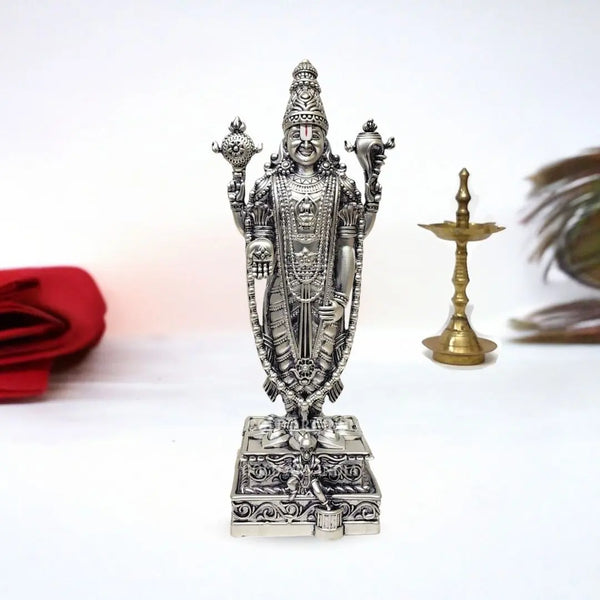
Silver, like our 9 Inch Silver Plated Black Finish Balaji, suits car dashboards, office desks, and households that already display gold-heavy Ganesha or Lakshmi idols.
Expert insight: if you're setting up your very first mandir and haven't yet decided on an overall gold or silver theme for the whole shelf, install Balaji first in gold — it's the more traditional starting point, and it's easier to add silver secondary pieces around an established gold centrepiece than the reverse.
Real-Life Use Cases
| Primary home mandir | Gold |
| Car dashboard | Silver |
| Wedding or housewarming gift | Gold |
| Secondary shelf alongside gold Lakshmi/Ganesha | Silver, for visual balance |
| First-ever mandir installation | Gold, as the traditional starting point |
Vastu Tips
Vastu guidance concerns placement and direction, not the plating metal — both are equally auspicious in this respect. Balaji faces West, with the devotee facing East during puja, regardless of metal choice.
Comparison: Gold vs Silver vs Dual-Tone
| Gold | Traditional, grandeur, gifting |
| Silver | Understated, practical, car/desk |
| Dual-tone | Middle ground, pairs with either gold or silver mandir setups |
A Practical Note
Gold plated idols show fingerprints and dust more visibly than silver due to higher shine — factor in cleaning frequency when choosing.
Common Mistakes People Make
- Assuming one metal is spiritually superior — neither is
- Choosing gold for a dashboard where fingerprints show constantly
- Not considering existing mandir decor when picking a metal
- Overthinking the decision — both metals are equally valid, and use case should drive the choice more than symbolism debates
Maintenance & Care
Both metals hold their finish equally well when genuinely electroplated and cleaned with a soft dry cloth only.
Seasonal Relevance
Gold dominates Diwali, Vaikunta Ekadashi, and wedding gifting; silver remains a steady year-round choice for cars and desks.
Frequently Asked Questions
Which metal is more durable long-term?
Both are equally durable when genuinely electroplated — finish quality depends on the plating process, not the metal itself.
Is a dual-tone idol harder to match with decor?
Not usually — dual-tone pieces bridge both gold and silver items already on a shelf.
Does the metal affect the blessings?
No — Vastu and devotional tradition don't rank one metal as spiritually superior.
Should my first Balaji idol be gold or silver?
Gold is the more traditional starting point for a first mandir installation.
Related Reading
Best Balaji Idol for Home Temple · Balaji for Car Dashboard
Conclusion — What to Actually Buy
For a primary home mandir, go gold. For a secondary spot — car, office, or smaller shelf — silver is equally appropriate and often more practical.